Midori Hirano
The Juniper Tree
thrill-667 · 2026
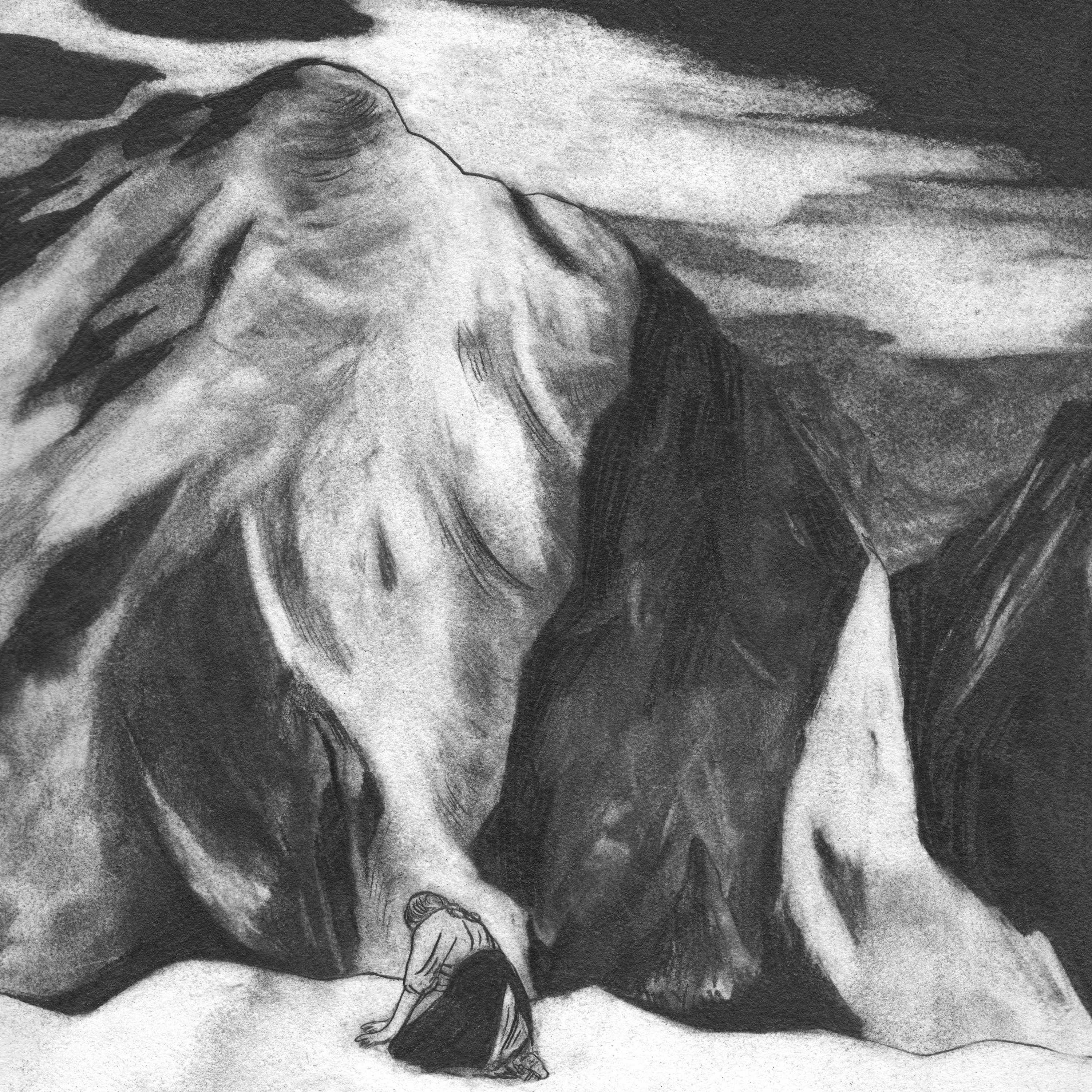
In The Juniper Tree, an interrelationship between the ethereal and terrestrial seems to cloak the everpresent Icelandic landscape. The film, written and directed by Nietzchka Keene in 1986 and released in 1990, is disbelieving of binaries such as life and death, natural and supernatural, stillness and unrest. It is perhaps best known as the genesis point for Björk’s career as an actor, but in its compelling feminist retelling of the Brothers Grimm story of the same name it recasts tropes of witches and wicked stepmothers as women in tune with nature’s gifts and fighting for survival under the suspicious gaze of patriarchy. Throughout, the land dwarfs the characters, and a sense of studied quietude saturates even the tensest moments. Tenderness and terror intertwine as a web of familial bonds contract and unravel, the dead reappearing as visions and as birds.
In 2025, Japanese composer Midori Hirano was commissioned by Kunstencentrum Viernulvier to create a new soundtrack to the film for their acclaimed Videodroom series, in which contemporary experimentalists reimagine the musical accompaniment of classic arthouse cinema. Her sonic vision for The Juniper Tree is imbued with the same sense of restraint as the film, hushed in both its moments of beauty and intensity. Hirano presents piano compositions that are steeped in minimalism, but speak with a delicate language that signifies the emotional bonds shared by the characters, especially the sister witches Katla and Margit. Elsewhere, synthesizers emerge from supple silences, their tones felted and intimate, even as they are paired with images of stark Icelandic vistas. Despite the music’s gravity, it floats weightlessly, featherlike, on the ear.
While composing the music for The Juniper Tree, Hirano drew on her own memories of touring Iceland, which included a stop at a waterfall featured in the film and rendered in sound on “Mother’s Path.” Folktales, like the origins of The Juniper Tree, are often attempts to contend with humans’ place in the natural world, with all its mysteries and intricacies, and both the film and Hirano’s soundtrack draw their sense of breathless wonder in part from the sensation of being engulfed by one’s environment. Margit, played by Björk, possesses a sublime sensitivity to her environment that allows her to receive messages from her mother, who was murdered for their shared inheritance of witchcraft. Hirano captures the relationship between the transcendental awe that is felt as supernatural and the private feelings of being immersed in that experience, creating a musical dialogue between the self and what lies beyond.
In the final sentences of her liner notes describing the film’s philosophical and feminist throughlines, Anna Bogutskaya says, “what we call Margit’s witchcraft is maybe just her willingness to listen.” This is the magic of music, and Hirano composes with an alchemist’s pen. Just as Keene seems to break down barriers between binary poles, Hirano uses both electronic and acoustic means to communicate the film’s emotive cues, uniting approaches she has explored under her own name and the alias MimiCof. There is an understanding that stillness can be understood as peaceful or foreboding, that dissonance and consonance are contextual, that efforts to protect one’s own kin can lead to tragic ends. At the film’s end we see Margit enthralled with birdsong, understanding it as something deeper, a connection to those she has lost. Through sound, we understand what lies beyond sight, beyond convention, and with this new soundtrack we hear the story anew.
Midori Hirano - The Juniper Tree trailer
Tracklist
- 2. Far Above
- 4. Temptation
- 5. What Connects The Two
- 6. The Dead Goat
- 7. You Can See What We Can't See
- 9. Mother's Path
- 10. In A Glass Box
- 11. Midnight
- 12. Silencing
- 13. Bird Sleeping In Water
- 14. A Piece Of Him
- 16. Forever In The Sky